Mahabaleshwar Market · Mahabaleshwar · established locality
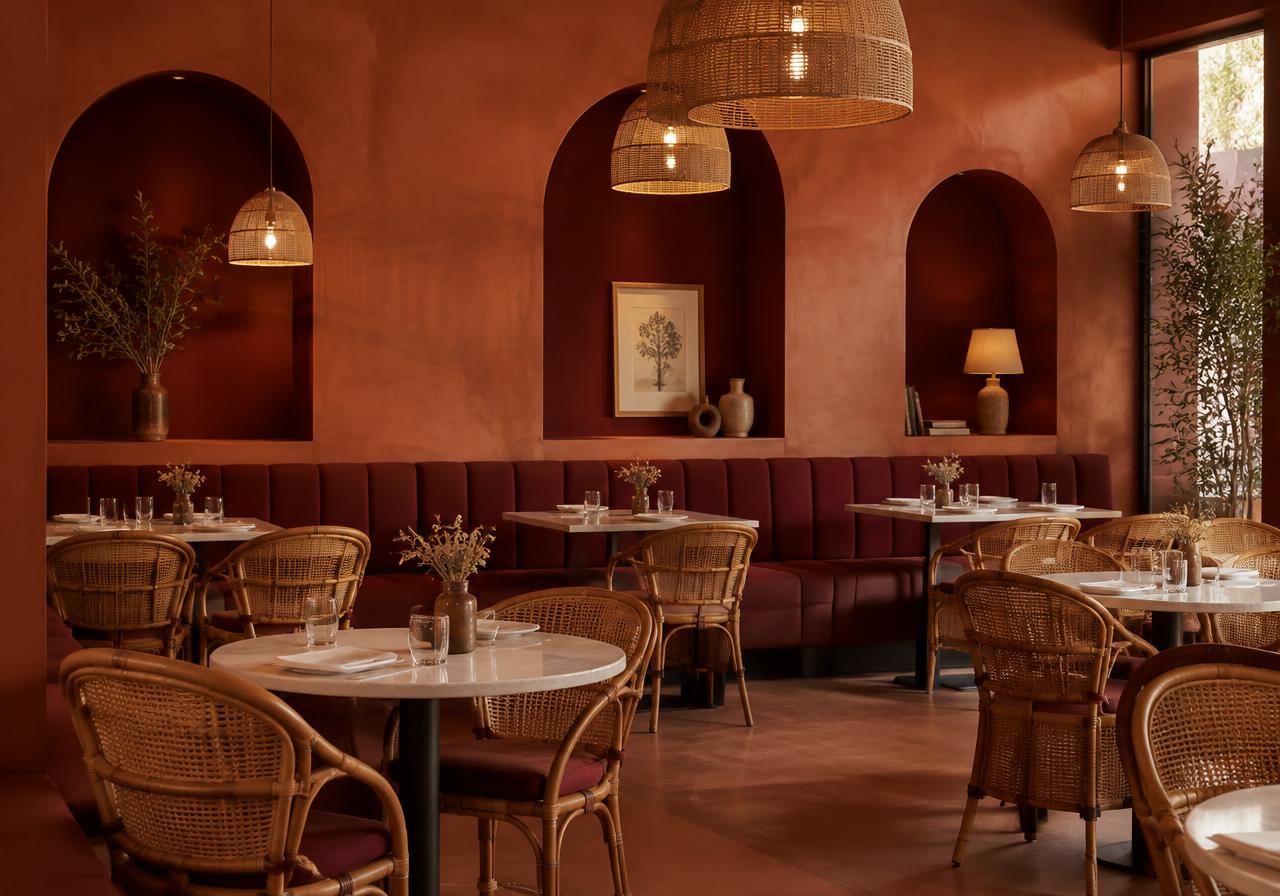
Restaurant & Café Interiors in Mahabaleshwar Market, Mahabaleshwar
Restaurant & Café Interiors in Mahabaleshwar Market starts with the building rather than the mood board: ghat haulage and crew accommodation decide what can actually be built here, and we quote on that basis.
Restaurant & Café Interiors in Mahabaleshwar Market at a glance
Indicative from
₹2,000
per sq ft · established locality rates
Typical delivery
45–75 days
From design sign-off
Locality profile
established locality
Mahabaleshwar Market, Mahabaleshwar
From our studio
120 km
Planned full-day site visits
Short answer
Mahabaleshwar Market builds for weather first
Mahabaleshwar Market belongs to Mahabaleshwar's wider Satara District market, which is built on heritage cottages, hotels, resorts and luxury hill villas in a high-rainfall climate. We work right across Mahabaleshwar Market — Main Market, Venna Lake, and the societies set back from them.
That is not background colour, it is the specification. For restaurant & café interiors, what gets built in Mahabaleshwar Market is set by how material reaches the site, what the building will allow, and what the weather does to a finish over five years.
Restaurants fail on three invisible systems — exhaust and make-up air, drainage, and acoustics — long before anyone criticises the furniture.
What we build here
Mostly valley-facing villas, colonial cottages, boutique resorts, homestays.
Getting material to site
Material moves up the ghat in tempos rather than full trucks, so we batch deliveries and pre-assemble modular carcasses at our Pune factory before they travel to Mahabaleshwar Market.
Permissions & work hours
Hill-station building norms and eco-sensitive zone limits apply around Mahabaleshwar Market. We keep structural changes within the existing footprint and route approvals through the local authority before any civil work starts.
Structural reality
Stone walls and sloped roofs leave very few true right angles, so every wardrobe and kitchen run is re-measured on site after demolition rather than cut from a drawing.
Climate load on materials
Joinery in Mahabaleshwar Market has to handle 2,000–6,000 mm of monsoon rain, months of standing humidity and real fungal growth on untreated timber, in one of the highest-rainfall towns in India. Local basalt and Kota drink water unless sealed, and a saturated stone floor stays cold and slippery.
Distance from our studio
We are around 120 km, close to a three-hour drive each way. Design sign-off is treated as a hard milestone before mobilisation, because mid-project changes are genuinely expensive at this distance.
What clients in Mahabaleshwar Market actually ask for
Briefs here repeat, and these are the points that come up before budget does.
- Interiors that survive being shut up and unused for weeks between visits.
- Views protected — joinery kept low and off the valley-facing wall.
- Renovation of a 15–25 year old home rather than a fresh fit-out.
- A firm budget ceiling, with scope staged across two phases where it helps.
- Completion against a lease or launch date that has penalties attached.
Specification
What we specify for Mahabaleshwar Market
Joinery in Mahabaleshwar Market has to handle 2,000–6,000 mm of monsoon rain, months of standing humidity and real fungal growth on untreated timber, in one of the highest-rainfall towns in India. These are the lines that decide whether it survives that, and they are named in the quote rather than summarised as "premium materials".
Sealed natural stone, re-sealed periodically
Local basalt and Kota drink water unless sealed, and a saturated stone floor stays cold and slippery.
Anti-fungal primer behind every carcass
The back of a wardrobe against an external wall is where mould starts, long before anyone can see it.
BWP 710-grade marine plywood throughout
Boiling-waterproof ply survives the damp season. Commercial MR ply delaminates within two monsoons at this altitude.
Treated or synthetic upholstery and curtain fabric
Untreated natural cotton mildews on the roll in valley humidity.
Trickle vents or a dehumidifier point in closed rooms
A house shut up for three weeks in July needs air movement, or everything soft inside it holds the smell.
Restaurant & Café Interiors: the trade detail
Kitchen exhaust and make-up air sized together
An exhaust hood without make-up air pulls the dining room into negative pressure and drags kitchen odour straight through the front door.
Grease trap, drain line and floor fall coordinated with the kitchen consultant
Commercial kitchen drainage sets the floor level, and the floor level sets every threshold in the restaurant.
Acoustic ceiling or baffles over hard-surface dining
Exposed-service interiors look good and sound terrible. An NRC 0.7 ceiling is what lets a table hold a conversation and turn.
Seating mix of twos, fours and a bench run at 0.9–1.4 m² per cover
Too many four-tops leaves a room looking empty at 2pm and turning couples away at 8pm.
Washable surfaces to 1,200 mm on every service route
Chair backs and trolleys mark walls at exactly that height, and a matte emulsion will not release the marks.
Indicative cost
Restaurant & Café Interiors cost in Mahabaleshwar Market
Three specification levels, priced at established locality rates for Mahabaleshwar Market. Indicative only — a real number needs a site visit.
| Package | Range (per sq ft) | Specification |
|---|---|---|
| Essential | ₹2,000 – ₹3,750 | Laminate and metal bar, bench and loose seating, acoustic ceiling, dimmable warm lighting, vinyl signage |
| Premium | ₹3,750 – ₹4,700 | Feature bar in stone and veneer, upholstered banquettes to contract fabric, designed lighting scenes, treated acoustics, façade rebuild |
| Luxury | ₹4,700 – ₹5,500+ | Bespoke concept build-out, custom lighting and joinery, acoustics designed to a measured target, full FF&E procurement and styling |
Indicative ranges for Mahabaleshwar Market, Mahabaleshwar at established locality rates (level with the Mahabaleshwar median). Final pricing follows the site visit and depends on size, finish level and scope. Nothing here is a quotation.
What moves the number in Mahabaleshwar Market
Adds cost here
- Material reaches Mahabaleshwar Market up the ghat in tempos rather than full trucks, so freight is charged per batch and a contingency trip is realistic.
- On jobs running past about three weeks, crew accommodation on site is a real line rather than a rounding error.
- A lot of Mahabaleshwar Market's stock is 15–30 years old, so honest scope includes rewiring and concealed plumbing replacement rather than patching around them.
Takes cost off here
- Local masons for stone, plaster and roof work cost less than bringing the same trades from Pune.
- Pre-assembling modular carcasses at our Pune factory removes most on-site carpentry hours, which is where hill projects usually overrun.
- Mature supply around Mahabaleshwar Market keeps stone, tile and hardware local, with no freight and short lead times.
Delivery plan
45–75 days, phase by phase
Derived from the restaurant & café interiors programme and adjusted for what Mahabaleshwar Market allows on site.
Weeks 1–2
Brief, site survey and concept
We record the shell, services and constraints in Mahabaleshwar Market, agree the brief against headcount or key count, and present the concept. Design sign-off is treated as a hard milestone before mobilisation, because mid-project changes are genuinely expensive at this distance.
Weeks 2–3
Design development and approvals
Drawings, specifications and the compliance set are developed and submitted. Hill-station building norms and eco-sensitive zone limits apply around Mahabaleshwar Market. We keep structural changes within the existing footprint and route approvals through the local authority before any civil work starts.
Weeks 3–5
Civil, partitions and MEP first fix
Partitions, conduiting, plumbing and HVAC modification. Stone walls and sloped roofs leave very few true right angles, so every wardrobe and kitchen run is re-measured on site after demolition rather than cut from a drawing.
Weeks 5–6
Production and procurement in parallel
Joinery is produced at our Pune factory while long-lead items are procured against the schedule. Material moves up the ghat in tempos rather than full trucks, so we batch deliveries and pre-assemble modular carcasses at our Pune factory before they travel to Mahabaleshwar Market.
Weeks 6–7
Flooring, ceiling and second fix
Flooring, ceiling, lighting, data and the finishes that carry 2,000–6,000 mm of monsoon rain, months of standing humidity and real fungal growth on untreated timber, in one of the highest-rainfall towns in India. Sealed natural stone, re-sealed periodically is specified here and checked on delivery.
Week 8
Installation, FF&E and commissioning
Furniture, fixtures and equipment are installed, services are commissioned and tested, and compliance inspections are closed out.
Week 9
Snag, handover and operations brief
A written snag list, as-built drawings, warranty documents and a walkthrough with whoever will maintain the space.
Local schedule reality in Mahabaleshwar Market
Styles & scope
What suits Mahabaleshwar Market
Style choices here are made for daylight, humidity and maintenance before they are made for looks.
Colonial cottage
Picks up the stone, timber and sloped-roof vocabulary already present in Mahabaleshwar Market's older buildings, so new joinery reads as part of the house instead of an insert.
Rustic luxe
Rough stone and sawn timber set against sealed, serviceable finishes — the one combination that works with hill damp rather than pretending it is not there.
Tropical modern
Louvres, cane and ventilated joinery matter more than appearance at Mahabaleshwar Market's humidity, because trapped air behind closed panels is what causes the musty smell.
Warm minimal
Fewer surfaces means fewer places for mould to start and less to maintain in a house that sits closed for weeks between visits.
What the scope covers in Mahabaleshwar Market
- Concept & theme
- Kitchen coordination
- Seating mix
- Ambient lighting
- Re-measurement after demolition, not off the builder's drawing
- Modules pre-assembled at our Pune factory before they travel up the ghat
- Anti-fungal primer behind every carcass on an external wall
- Local authority and eco-sensitive zone clearances routed before civil work
- A written snag list closed before the final payment
Questions
Restaurant & Café Interiors in Mahabaleshwar Market: FAQs
Cost, access, materials and after-sales — answered for Mahabaleshwar Market specifically rather than in general.
How much does restaurant & café interiors cost in Mahabaleshwar Market?+
Indicative ranges in Mahabaleshwar Market run from ₹2,000 – ₹3,750 for an essential specification up to ₹4,700 – ₹5,500+ at the top end, per sq ft. Mahabaleshwar Market is established locality within Mahabaleshwar, so these sit roughly level with the Mahabaleshwar median. After a site visit you get an itemised quote — board grade, hardware brand, finish and labour priced separately — so you can see exactly what moves if the budget moves.
How long does restaurant & café interiors take in Mahabaleshwar Market?+
45–75 days from design sign-off for a typical project. Schedules in Mahabaleshwar Market are planned around the rain. Between June and September the ghat slows deliveries and polish, paint and adhesive do not cure properly in standing humidity, so wet work and finishing are pulled either side of that window. Resident crew with a visiting supervisor each week, plus local masons for stone and roof work.
What permissions and access arrangements do you handle in Mahabaleshwar Market?+
Hill-station building norms and eco-sensitive zone limits apply around Mahabaleshwar Market. We keep structural changes within the existing footprint and route approvals through the local authority before any civil work starts. Material moves up the ghat in tempos rather than full trucks, so we batch deliveries and pre-assemble modular carcasses at our Pune factory before they travel to Mahabaleshwar Market.
Which materials actually last in Mahabaleshwar Market?+
Mahabaleshwar Market joinery has to survive 2,000–6,000 mm of monsoon rain, months of standing humidity and real fungal growth on untreated timber, in one of the highest-rainfall towns in India. That is why the specification here leads with sealed natural stone, re-sealed periodically and anti-fungal primer behind every carcass. Local basalt and Kota drink water unless sealed, and a saturated stone floor stays cold and slippery. These are the lines a low quote downgrades quietly, so they are named in writing in ours.
Who handles service visits in Mahabaleshwar Market after handover?+
The same team that built it. We are around 120 km, close to a three-hour drive each way. Resident crew with a visiting supervisor each week, plus local masons for stone and roof work. Modular hardware carries the manufacturer's written warranty, and our own workmanship warranty covers the joinery, electrical and plumbing we executed. Design sign-off is treated as a hard milestone before mobilisation, because mid-project changes are genuinely expensive at this distance.
What pushes the cost up or down in Mahabaleshwar Market specifically?+
Adding cost: Material reaches Mahabaleshwar Market up the ghat in tempos rather than full trucks, so freight is charged per batch and a contingency trip is realistic. On jobs running past about three weeks, crew accommodation on site is a real line rather than a rounding error. Taking it off: Local masons for stone, plaster and roof work cost less than bringing the same trades from Pune. Pre-assembling modular carcasses at our Pune factory removes most on-site carpentry hours, which is where hill projects usually overrun.
Also in this area
Services that pair with this in Mahabaleshwar Market
Scopes that are usually planned together, so the civil and electrical work happens once.
Free consultation
Planning interiors in Mahabaleshwar Market, Mahabaleshwar?
Share a few details and a senior designer will call you to schedule a site visit, discuss ideas and give you a realistic budget.
Prefer to talk now? +91 96731 98867