Lonavala & Khandala · hill station
Interior designers in Pawna, Lonavala & Khandala
Pawna builds for weather first — so this page covers what that changes: 20 services available here, an indicative ₹1,400 – ₹4,000 per sq ft, and the access and permission reality before any of it is priced.
Locality type
Hill station
Lonavala & Khandala, Pune District
Services covered
20 of 31
19 residential · 1 commercial
Full-home range
₹1,400 – ₹4,000
Per sq ft, indicative until measured
From our studio
65–70 km
Half-day visits up the expressway
Designing in Pawna
Sitting inside Lonavala & Khandala, Pawna shares the character of Pune District — weekend bungalows, private villas and resorts.
Most of our Pawna enquiries come from the stretch around Pawna Lake, and from Tikona Fort.
Designing in Pawna is less about style and more about survival: stone walls that are never quite square, roofs that slope, and a damp season long enough to destroy any panel that was not boiling-waterproof to begin with.
What we work on here
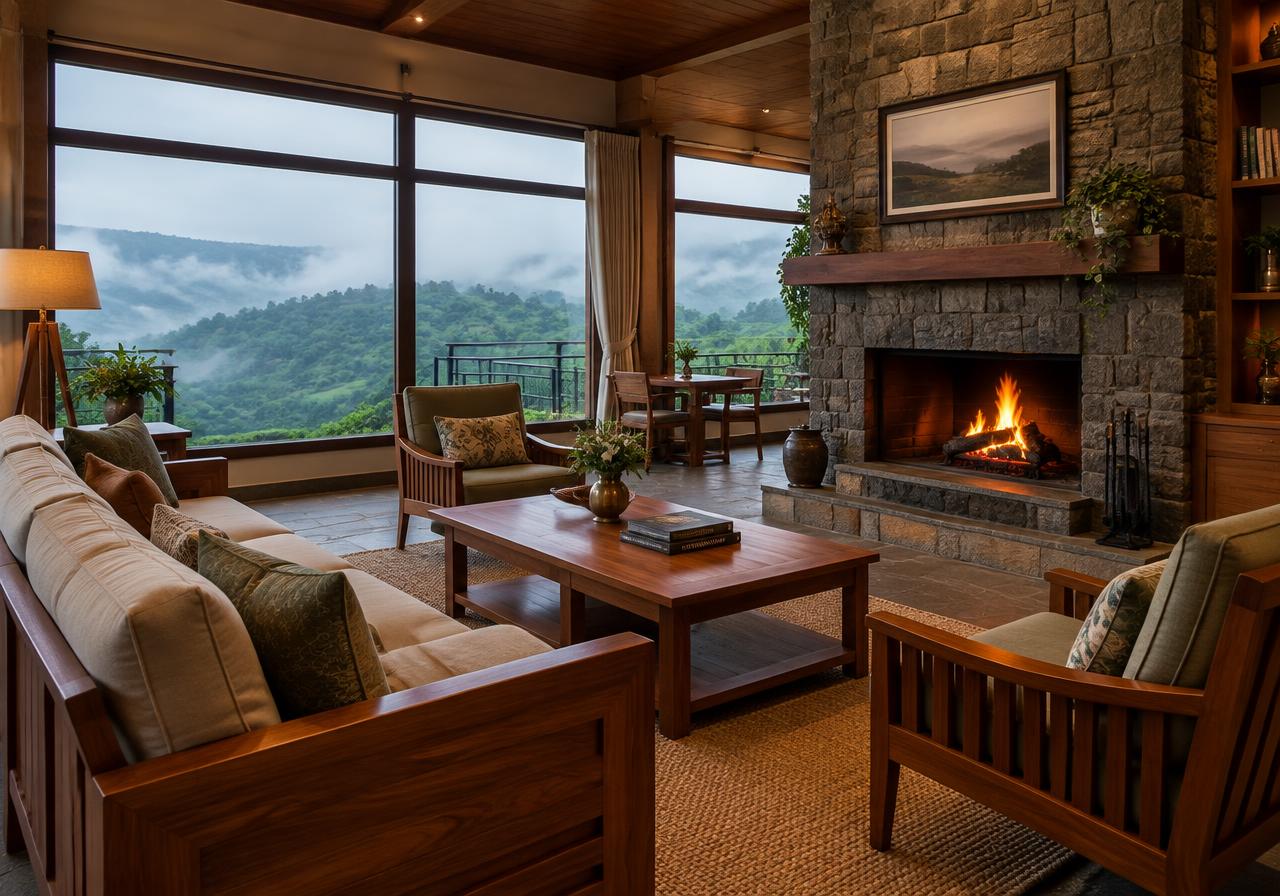
Valley-facing villas, colonial cottages, boutique resorts and homestays.
Getting material in
Material moves up the ghat in tempos rather than full trucks, so we batch deliveries and pre-assemble modular carcasses at our Pune factory before they travel to Pawna.
Structure sets the limit
Stone walls and sloped roofs leave very few true right angles, so every wardrobe and kitchen run is re-measured on site after demolition rather than cut from a drawing.
Permissions & work hours
Hill-station building norms and eco-sensitive zone limits apply around Pawna. We keep structural changes within the existing footprint and route approvals through the local authority before any civil work starts.
Local demand
What Pawna asks for
Briefs for Farmhouse Interior Design, Villa Interior Design and Bungalow Interior Design in Pawna tend to share the same priorities, so we plan for them rather than discover them in week three.
- Interiors that survive being shut up and unused for weeks between visits.
- Views protected — joinery kept low and off the valley-facing wall.
- Low-maintenance surfaces, because there is rarely daily help to keep them up.
- Hosting at scale: kitchens and dining that work for twenty people, not four.
Style
Styles that work in Pawna
Four directions that suit the building stock here, and the practical reason each one holds up rather than just photographing well.
Colonial cottage
The stone walls, pitched roofs and deep verandahs around Pawna are already colonial in proportion, so working with them costs less than fighting them — and lime-washed walls and sealed timber handle the damp far better than gypsum.
Rustic luxe
Local basalt, reclaimed teak and hand-finished plaster read as luxury at this altitude and shrug off the monsoon. Polished marble and gloss lacquer, by contrast, go cloudy in a high-humidity cottage.
Tropical modern
Louvred shutters, cane inserts and cross-ventilated plans suit a house that sits shut for weeks between visits. Air has to keep moving behind the joinery, or you can smell that it hasn't.
Warm minimal
Few surfaces, every one of them specified properly, is the honest answer here — each extra material joint is another place water can sit for three months.
Build conditions
What Pawna does to materials
Materials in Pawna are chosen against local conditions first and appearance second. Every line below exists because of something this place does to an interior over five years.
The risk we design against
BWP 710-grade marine plywood throughout
Boiling-waterproof ply survives the damp season. Commercial MR ply delaminates within two monsoons at this altitude.
Lime or breathable mineral paint on old stone walls
Cement putty and acrylic paint trap moisture inside a stone wall and blister off within a season.
Anti-fungal primer behind every carcass
The back of a wardrobe against an external wall is where mould starts, long before anyone can see it.
Batten-backed or raised timber flooring
Laid straight onto a slab in this rainfall, a wooden floor cups and lifts; a ventilated cavity lets it dry.
Sealed natural stone, re-sealed periodically
Local basalt and Kota drink water unless sealed, and a saturated stone floor stays cold and slippery.
Services
Interior services in Pawna
We run 20 services in Pawna: 19 residential and 1 commercial. The others are listed only in localities that genuinely support them.
Residential interiors in Pawna
Weekend and second homes that have to be fine after six weeks shut — ventilation, sealed stone and hardware that does not rust are the real brief.
Farmhouse Interior Design in Pawna
Rustic-luxe farmhouses and weekend homes.
Villa Interior Design in Pawna
Statement interiors for independent villas.
Bungalow Interior Design in Pawna
Timeless bungalow interiors, room by room.
Home Interior Design in Pawna
End-to-end design and execution for your entire home.
Modular Kitchen Design in Pawna
Ergonomic, durable kitchens built to last.
2 BHK Interior Design in Pawna
Balanced, family-ready 2 BHK interiors.
3 BHK Interior Design in Pawna
Premium 3 BHK interiors with personality.
Home Renovation in Pawna
Transform older homes without the stress.
Wardrobe Design in Pawna
Sliding, hinged and walk-in wardrobes.
Turnkey Interior Solutions in Pawna
One team from concept to keys.
False Ceiling Design in Pawna
Gypsum, POP and wooden ceilings with cove lighting.
Living Room Interior Design in Pawna
Living rooms designed for hosting and comfort.
Bedroom Interior Design in Pawna
Restful bedrooms with tailored storage.
1 BHK Interior Design in Pawna
Smart, space-saving interiors for compact homes.
4 BHK & Penthouse Interiors in Pawna
Bespoke luxury for large apartments and penthouses.
Bathroom Interior Design in Pawna
Spa-like bathrooms with premium fittings.
Pooja Room Design in Pawna
Serene mandirs in marble, wood and brass.
Kids Room Design in Pawna
Safe, playful rooms that grow with your child.
Home Office Design in Pawna
Productive, video-call-ready study rooms.
Commercial interiors in Pawna
Hospitality that earns in a season: rooms, dining and lobbies specified for guest wear and monsoon damp at the same time.
Nearby
Localities near Pawna
Localities next to Pawna with a similar access and permission picture.
Most relevant services for Pawna
Guides worth reading first
FAQ
Interiors in Pawna
Do you design interiors in Pawna, Lonavala & Khandala?+
Yes. Pawna is roughly 65–70 km up the Mumbai–Pune expressway, and we currently run 20 of our 31 services here — 19 residential and 1 commercial. Most of our Pawna enquiries come from the stretch around Pawna Lake, and from Tikona Fort. Measurement and the first design consultation are free.
What does interior design cost in Pawna?+
Full-home work in Pawna is quoted at an indicative ₹1,400 – ₹4,000 per sq ft, and farmhouse Interior Design between ₹1,700 – ₹3,000 and ₹3,900 – ₹4,600+ (per sq ft). As a hill station, Pawna sits above our city baseline, mostly because of larger carpet areas and a finish standard that gets inspected close up. Every figure here is indicative until we have measured the space.
How soon can you start a project in Pawna?+
Pawna is roughly 65–70 km up the Mumbai–Pune expressway. Visits are planned as half-day trips, and we front-load decisions so you are not waiting on a second visit to settle small clarifications. On projects longer than about three weeks we house the crew locally, which keeps progress steady instead of losing hours to travel. Typically that means a site visit within two working days, design sign-off in two to three weeks, and execution of farmhouse Interior Design in 75–120 days from that sign-off.
Do hill-station building rules apply in Pawna?+
Hill-station building norms and eco-sensitive zone limits apply around Pawna. We keep structural changes within the existing footprint and route approvals through the local authority before any civil work starts. In practice that means we keep structural changes inside the existing footprint, design around the stone and roof you already have, and get written clearance before demolition rather than after.
Which materials actually last in Pawna?+
The specification here is written against 2,000–6,000 mm of monsoon rain, months of standing humidity and real fungal growth on untreated timber, on a corridor that takes some of the heaviest monsoon exposure in the state. Two lines we never downgrade: BWP 710-grade marine plywood throughout, because boiling-waterproof ply survives the damp season; and lime or breathable mineral paint on old stone walls, because cement putty and acrylic paint trap moisture inside a stone wall and blister off within a season.
What kind of properties do you work on in Pawna?+
Mostly valley-facing villas, colonial cottages, boutique resorts and homestays. Stone walls and sloped roofs leave very few true right angles, so every wardrobe and kitchen run is re-measured on site after demolition rather than cut from a drawing.
Free consultation
Planning interiors in Pawna, Lonavala & Khandala?
Share a few details and a senior designer will call you to schedule a site visit, discuss ideas and give you a realistic budget.
Prefer to talk now? +91 96731 98867